FabricIQ
Reading the label…
FabricIQ
Reading the label…
Made from cellulose acetate derived from wood pulp. Has a silk-like appearance and is commonly used for linings and formal wear.
Material-quality rubric (6 axes), not a garment verdict — see disclosure below. Sustainability is a separate Eco score, shown apart.
How long the fabric lasts with regular use
Softness, feel against skin, wearability
Air flow and ventilation
Heat retention and insulation
Ability to pull sweat away from skin
How easy it is to wash, dry, and maintain
Sustainability (separate Eco score)
Environmental impact of production and disposal
8 brands have products in our catalog whose composition contains acetate. Sorted by how many garments they offer with this fiber.
Stussy
8 products
PLST
7 products
YMC
6 products
Comme des Garçons
2 products
Club Monaco
2 products
Aime Leon Dore
2 products
Zara
1 product
Kith
1 product
Brand grade = average overall score across all of their products containing acetate.
Top-scored garments in our catalog whose composition contains acetate. Click through for the full quality + health + eco breakdown.
Cotton Blend Relaxed Cardigan
43% Cotton, 39% Acetate, 18% Nylon
$43 · JP
2025Model Cotton Blend Tank Top
36% Cotton, 33% Nylon, 31% Acetate
$40 · JP
Cotton Blend Gilet Cardigan
43% Cotton, 39% Acetate, 18% Nylon
$23 · JP
Cotton Blend Crewneck Knit T
42% Cotton, 39% Acetate, 19% Nylon
$47 · JP
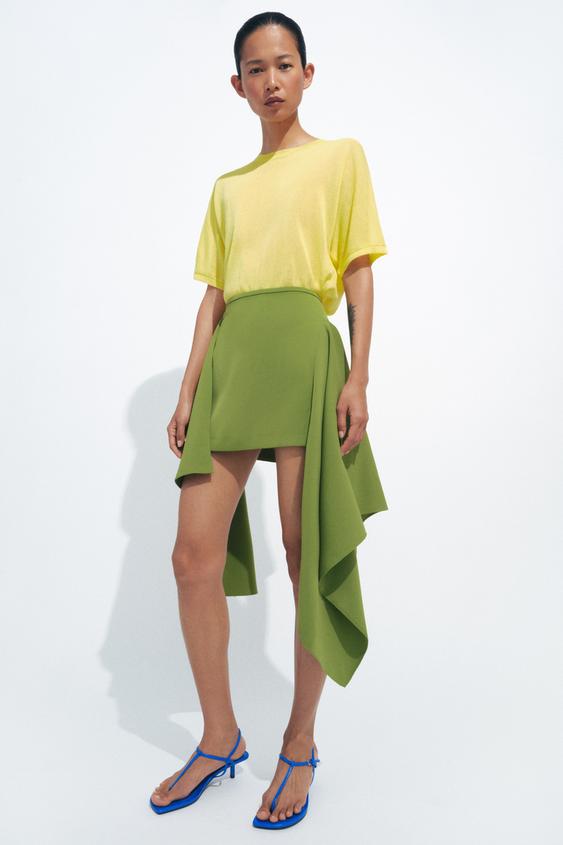
FINE KNIT SHORT SLEEVE TOP
55% Cotton, 45% Acetate
$46
Cotton Blend Flare Sleeve Sweater
43% Cotton, 39% Acetate, 18% Nylon
$17 · JP

Simone Rocha - Women's Lace Trim Negligee Bralette - (Black)
73% Acetate, 27% Silk
$275

Needles Jacquard Cloth Italian Collar Shirt - Square
83% Rayon, 17% Acetate
$325

Bodycon Pant
60% Acetate, 40% Polyester
$89
Linen Blend Jacket
63% Triacetate, 37% Polyester
$167 · JP

Fluid Crepe Trouser
71% Acetate, 29% Polyester
$129

Black Comme des Garçons - Reversible Frilled Jacket - (Black)
66% Acetate, 34% Polyester
$1025
This is a material rating, not a verdict on any specific garment made from acetate. The axes above are research-backed averages for the fiber itself.
Affordable lining and formal wear material
Higher-scored semi-synthetic materials. Same category — what to consider instead.
+34 vs Acetate · 82/100
BiodegradableLenzing branded lyocell made from sustainably harvested eucalyptus wood pulp using a closed-loop process. Softer and more consistent than generic lyocell.
+32 vs Acetate · 80/100
BiodegradableMade from wood pulp using a closed-loop solvent process. The most sustainable semi-synthetic fiber, with excellent drape and comfort.
+30 vs Acetate · 78/100
BiodegradableAn ultra-fine variant of modal made from beech tree pulp, with fibers significantly thinner than silk. Exceptionally soft and lightweight, it is the premium choice for high-end underwear and loungewear.
Special Notes
• Very heat sensitive — never use hot water
• Dry clean preferred
• Acetone (nail polish remover) dissolves acetate — keep away
$$$$$
Budget-friendly
May shrink 2-5% — wash cold
High environmental impact