FabricIQ
Reading the label…
FabricIQ
Reading the label…
Well-made, but rough on the environment.
Best for Buy once, keep for years to amortize the production hit.
This product scored 57/100 on the material-quality rubric (durability, comfort, breathability, warmth, moisture-wicking, care-ease), based on its composition of 63% Polyester, 37% Cotton. Sustainability is scored separately as the Eco Rating. Blended from 63% Polyester, 37% Cotton — the score is a weighted average based on each material's proportion.
C (55-69): Average material composition — typical blend, reasonable for everyday wear.
Average quality, high synthetic content
Decent for everyday wear, but the synthetic content means microplastic shedding and it won't biodegrade. Consider natural alternatives for your next purchase.
Below-typical fabric quality at an above-median price — you may be paying for the label, not the material.
Fabric value only — compares material quality to price vs other t-shirts. Construction, fit, and brand aren't measured.
63% Polyester, 37% Cotton
Mixed blend — natural + synthetic
Added Mar 27, 2026 · Data last updated Apr 1, 2026
Sustainability is scored separately — see the Eco Rating below.
Every wash of synthetic fabric releases up to 700,000 microplastic fibers into waterways. Use a Guppyfriend bag to catch them.
This fabric will take 200+ years to decompose. That means a shirt you buy today will still exist in the year 2226.
Synthetic fabrics can contain BPA, which mimics estrogen. Studies have found BPA transferring to skin through sweat contact.
Reasonable cost-per-wear
Base for T-Shirts: 80 expected wears.
× 1.00 for Polyester (mid-durability fiber, durability 76).
= 80 expected wears. $60 ÷ 80 ≈ 75¢/wear.
Missing GSM — this is a category-level estimate, not garment-specific. Expect ±30% variance.
Real life is messier than a formula: how often you wash, how you wash, whether you wear it inside-out, dry on low — all of it shifts the number. This is the ceiling under reasonable care.
Wash
warm (40°C)
Bleach
Do not bleach
Dry
tumble low
Good durability (76) and comfort (58) for office wear
Good durability (76) and breathability (50) for outdoor activities
Higher-rated t-shirts products — each card shows how much better this alt scores vs your current product.
Microplastic shedding · skin-contact synthetic load · likely chemical treatments
High health impact — significant synthetic content or likely chemical treatments. For frequent skin-contact wear, consider a natural-fiber alternative.
700,000 fibers/wash
63% synthetic
Antimony
63% synthetic (primarily polyester). High microplastic shedding risk. Every wash releases hundreds of thousands of plastic fibers into waterways.
$60 for a fabric that's 63% synthetic (plastic-based).
Materials will persist in the environment for decades.
We rate the fabric, not the garment. Composition is the floor of what you're guaranteed to be getting — most shoppers don't have that.
Iron
low
Dry Clean
avoid
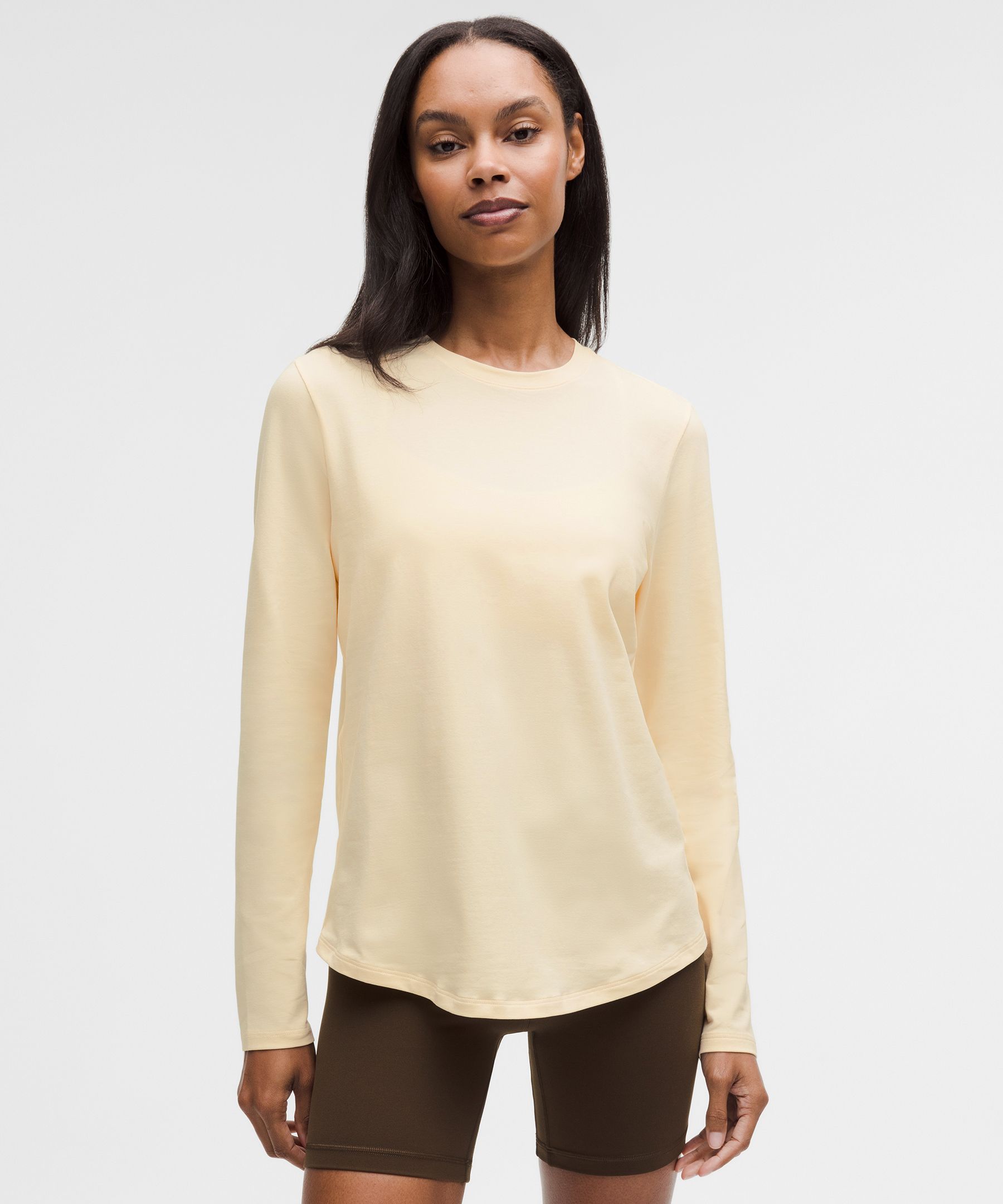
Lululemon
Love Long-Sleeve Shirt
94% Pima Cotton, 6% Elastane