FabricIQ
Reading the label…
FabricIQ
Reading the label…
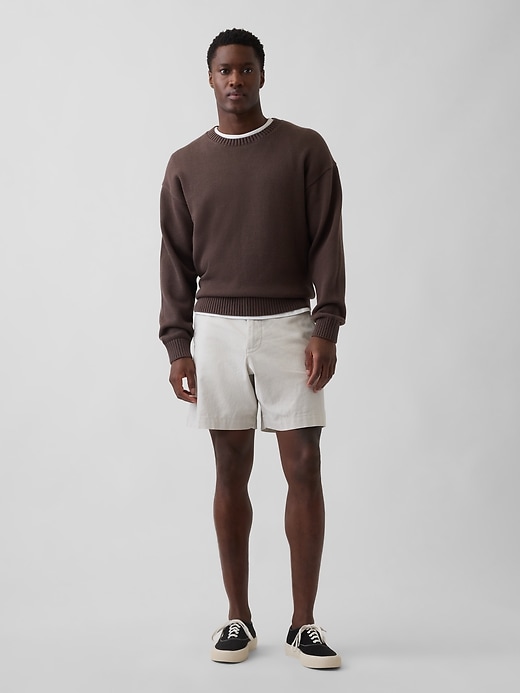
Safe to wear, but rough on the environment.
Best for Safe to wear; production isn't clean — donate when done.
This product scored 71/100 on the material-quality rubric (durability, comfort, breathability, warmth, moisture-wicking, care-ease), based on its composition of 55% Linen, 45% Cotton. Sustainability is scored separately as the Eco Rating. Blended from 55% Linen, 45% Cotton — the score is a weighted average based on each material's proportion.
B (70-84): Good material composition — above average across most axes.
Good quality
Well-balanced fabric that should serve you well. Follow the care guide to maximize lifespan.
Better-than-typical fabric for this category, at a below-median price.
Fabric value only — compares material quality to price vs other jeans. Construction, fit, and brand aren't measured.
55% Linen, 45% Cotton
All-natural fiber
Added Mar 29, 2026 · Data last updated Apr 1, 2026
Sustainability is scored separately — see the Eco Rating below.
Cotton biodegrades in 1-5 months. When you're done with this, it returns to the earth — not the ocean.
Cotton absorbs moisture but doesn't wick it. Great for a hot day, terrible for hiking — you'll stay wet.
Linen is made from flax, which grows in poor soil with little water. It's been used for clothing for over 30,000 years.
Strong cost-per-wear
Base for Jeans: 300 expected wears.
× 1.00 for Linen (mid-durability fiber, durability 71).
= 300 expected wears. $65 ÷ 300 ≈ 22¢/wear.
Missing GSM — this is a category-level estimate, not garment-specific. Expect ±30% variance.
Real life is messier than a formula: how often you wash, how you wash, whether you wear it inside-out, dry on low — all of it shifts the number. This is the ceiling under reasonable care.
Wash
cold (30°C)
Bleach
Oxygen only
Dry
line dry
Excellent durability (71) and comfort (76) for office wear
Good breathability (91) and moisture wicking (54) for light activity
Good comfort (76) and care ease (61) for casual wear
Good comfort (76) and breathability (91) for sleeping
Good breathability (91) and comfort (76) for undergarments
Good durability (71) and breathability (91) for outdoor activities
Higher-rated jeans products — each card shows how much better this alt scores vs your current product.
Microplastic shedding · skin-contact synthetic load · likely chemical treatments
Low health impact — predominantly natural fibers with no major treatment flags.
Minimal
0% synthetic
No flags
We rate the fabric, not the garment. Composition is the floor of what you're guaranteed to be getting — most shoppers don't have that.
Iron
medium
Dry Clean
avoid
Good sustainability score (69)
Twisted Seam Trouser
52% Lyocell, 28% Organic Cotton, 20% Linen


