FabricIQ
Reading the label…
FabricIQ
Reading the label…
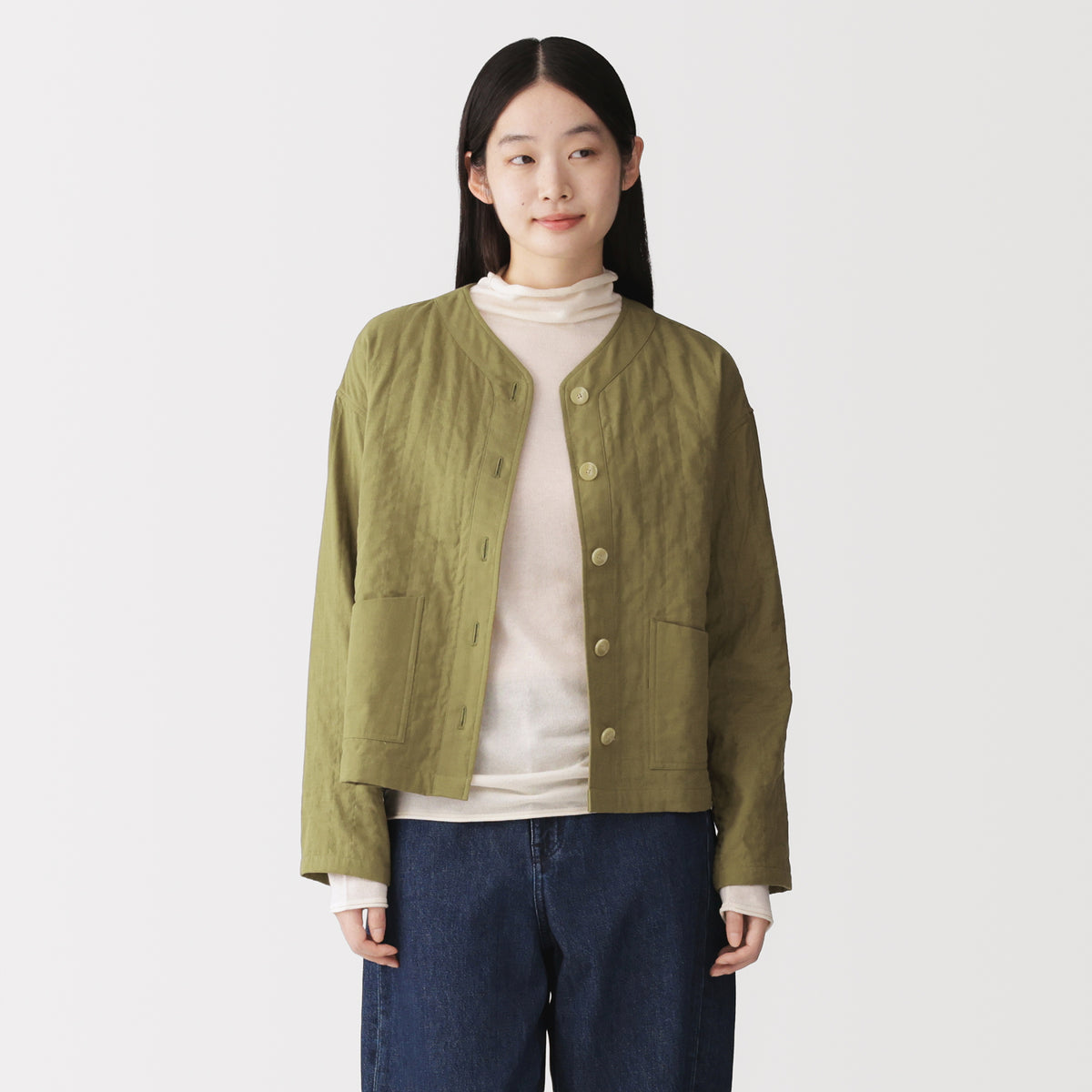
Strong across the board — well-made, safe to wear, and low planet cost.
Best for Daily wear, no caveats.
This product scored 70/100 on the material-quality rubric (durability, comfort, breathability, warmth, moisture-wicking, care-ease), based on its composition of 78% Organic Cotton, 22% Kapok. Sustainability is scored separately as the Eco Rating. Blended from 78% Organic Cotton, 22% Kapok — the score is a weighted average based on each material's proportion.
B (70-84): Good material composition — above average across most axes.
Good quality, eco-friendly
Solid fabric with strong environmental credentials. Organic Cotton (78%) is doing the heavy lifting. This is a smart buy.
Better-than-typical fabric for this category, at a below-median price.
Fabric value only — compares material quality to price vs other jackets. Construction, fit, and brand aren't measured.
78% Organic Cotton, 22% Kapok
All-natural, organic source
Added Apr 1, 2026 · Data last updated Apr 1, 2026
Sustainability is scored separately — see the Eco Rating below.
Cotton biodegrades in 1-5 months. When you're done with this, it returns to the earth — not the ocean.
Reasonable cost-per-wear
Base for Jackets: 200 expected wears.
× 0.70 for Organic Cotton (low-durability fiber, durability 53).
= 140 expected wears. $100 ÷ 140 ≈ 71¢/wear.
Missing GSM — this is a category-level estimate, not garment-specific. Expect ±30% variance.
Real life is messier than a formula: how often you wash, how you wash, whether you wear it inside-out, dry on low — all of it shifts the number. This is the ceiling under reasonable care.
Wash
cold (30°C)
Bleach
Oxygen only
Dry
flat dry
Excellent sustainability (83) and biodegradable — great eco choice
Good comfort (79) and care ease (67) for casual wear
Good comfort (79) and breathability (82) for sleeping
Good breathability (82) and comfort (79) for undergarments
Higher-rated jackets products — each card shows how much better this alt scores vs your current product.
Microplastic shedding · skin-contact synthetic load · likely chemical treatments
Low health impact — predominantly natural fibers with no major treatment flags.
Minimal
0% synthetic
No flags
Label confidence moderate — one signal suggests the composition may be incomplete or under-verified.
We rate the fabric, not the garment. Composition is the floor of what you're guaranteed to be getting — most shoppers don't have that.
Iron
medium
Dry Clean
avoid


